

Anno Robot (Shenzhen) Co., Ltd.
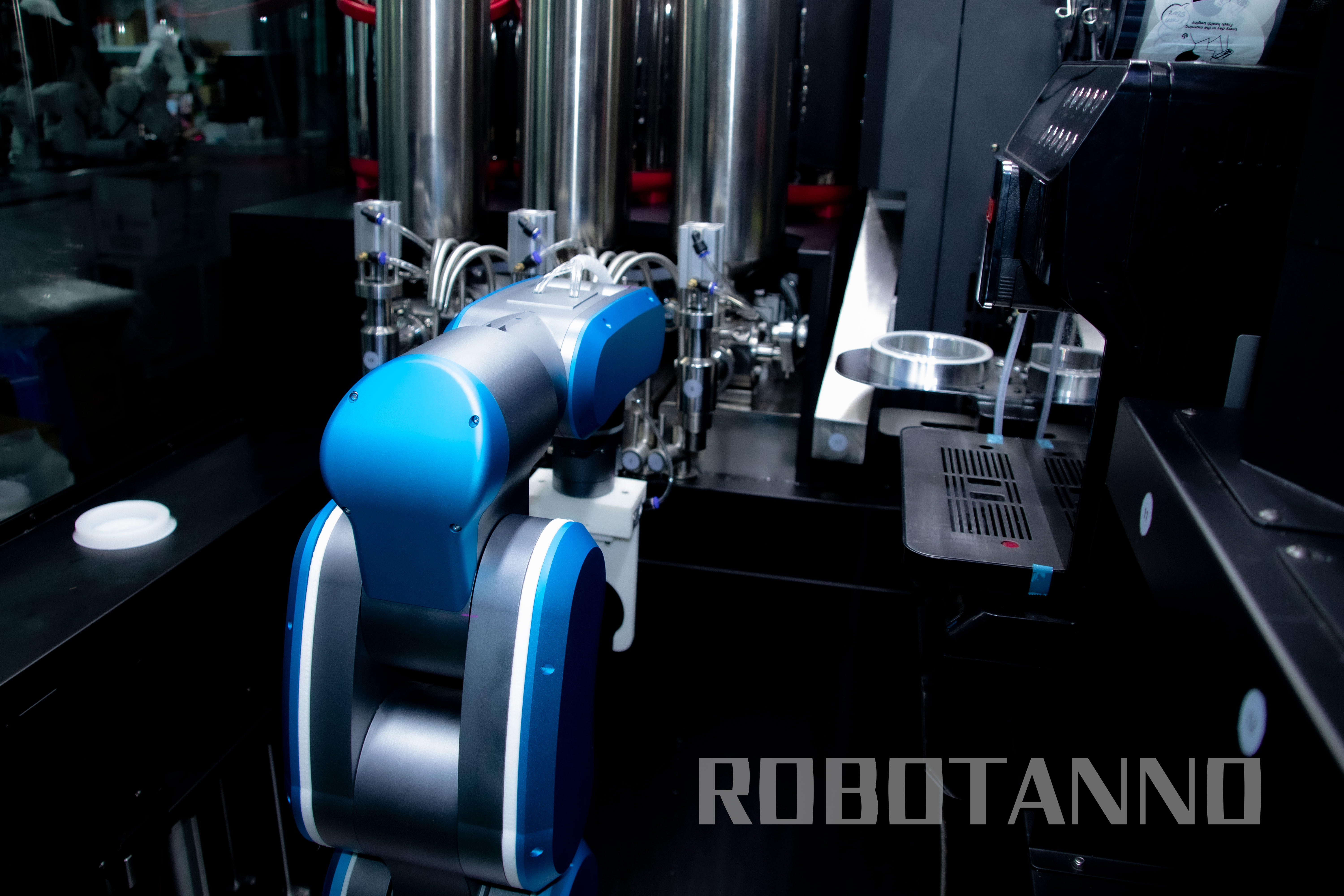
The company‘s desktop robotic arm products are widely used in education fields such as robot teaching, maker education, and secondary robot development. They can also be used in light industries such as sorting, handling, packaging, printing, coffee, milk tea drinks, ice cream self-service machines, and alcohol mixing. , Filming, medical and other commercial service industries, with strong versatility, suitable for a variety of operations. At present, the company‘s products have obtained customer recognition in relevant markets and have been sold to: China, the United States, Canada, Mexico, Germany, France, Spain, Russia, Italy, Poland, Turkey, Nigeria, Dubai, UAE, India, Thailand, Vietnam , South Korea, Japan, Australia and more than 30 countries around the world. At present, there are more than 20 domestic companies including Guangdong, Hong Kong, Beijing, Tianjin, Hebei, Jilin, Heilongjiang, Liaoning, Inner Mongolia, Gansu, Shaanxi, Henan, Sichuan, Hubei, Hunan, Shanghai, Jiangsu, Zhejiang, Fujian, Yunnan, Tibet, etc. Provinces and regions have launched market promotion and achieved good results. They have reached cooperation intentions with nearly 30 domestic universities such as Hong Kong University, Tsinghua University, Harbin Institute of Technology, and Shanghai Jiaotong University. The company‘s products and core technologies have intellectual property protection. At present, the company has applied for 1 invention patent, 3 utility model patents, 5 design patents and 8 software copyright registrations, and has applied for trademark registration protection for "Robot Anno". At the same time, the company‘s products have been issued a "Quality Inspection Report" and CE certification by a professional third-party testing agency.
The company is positioned as a technology research and development enterprise, and has established a sound project research and development organization management system and framework system. At the beginning of its establishment, it formulated the Research and Development Project Management System, the Intellectual Property Management System, the Research and Development Expenditure Accounting Management System, R & D management documents such as the “R & D staff performance evaluation management system” clearly define the project management process and control matters, implement process management of the project, and at the same time standardize the process management of R & D expenditure budget and investment, and implement “independent accounting, special funds, The basic principle of “appropriating for other purposes” is to conduct performance appraisal of project technology R & D personnel, set up performance appraisal links, clearly distinguish between rewards and penalties, and provide certain financial rewards to R & D personnel who have made greater contributions. Project personnel ’s bonus is directly linked to performance and performance. The implementation of the assessment system has mobilized the enthusiasm of the project team members, allowing them to invest in the project technology and product development process with higher enthusiasm
The desktop six-axis teaching robotic arm products produced by RobotAnno Company have been sold to universities in China. Key customers include: Hong Kong University, Taiwan Jiaotong University, Tsinghua University, Shanghai Jiaotong University, Zhejiang University, Beijing Jiaotong University, China Agricultural University, Beijing Information Science and Technology University, Wuhan University, China University of Geosciences, Sichuan University, Chongqing University, University of Electronic Science and Technology, Xi‘an University of Electronic Technology, Shanghai University, Nanjing University of Technology, Xijing University, Sichuan University of Science and Technology, Yancheng Institute of Technology, Shantou University, Changchun Vocational College of Information Technology, Zhengzhou Information Technology School, Zhengzhou Light Industry College, Taizhou University, Zhuhai Advanced Technical School, etc. , Computer science and technology, mechanical design and manufacturing machine automation, material molding and control, electrical engineering and automation and other professional directions. It is expected that the market size and customer demand will further expand in the future.
The task of the Anno Robotics course is to make students mainly understand the classification and application of robots, the basic concepts of robot application and dynamics, the application of 3D printer technology in the field of robots, the basic structure of robot bodies, the planning of robot trajectories, the composition and programming of robot control systems. Language, the basic composition and characteristics of a typical industrial robot automatic line, and a complete understanding of robots and their control systems. Cultivate students‘ ability to analyze and solve problems in robotics, and train students to have some practical skills in robotics. After graduation, they will engage in simulation, programming, debugging, operation, and sales of "industrial robots" and "service robots" series. Essential robotics foundation.
According to the differences of scientific research institutions such as technical secondary schools, junior colleges, undergraduate colleges and research institutes, Annuo Robots has made different solutions. Courses are generally divided into modules, including: basic training, comprehensive application training, and expanded applications. The three parts are distinguished from each other and related to each other. From shallow to deep, from single-chip computers to systems, the technology has continuity. From the experimental platform simulation to the actual industrial field application, students will gradually master the robot technology, industrial robot field application and operation, industrial control and motion control and other practical robot technologies.
Basic training: the study, design and printing of 3D printing technology, the theoretical knowledge of robotics, and the assembly of the body structure of mechanical arms.
Application comprehensive training: Debugging of the overall structure of the robot arm, completing the typical application of industrial robots such as painting, gluing, welding, grasping, and sucking of the robot arm.
Expanding the application: On the premise of familiar with the operation of the robotic arm, integrate multiple mechanical and electronic related equipment, such as: AGV + robotic arm, robotic arm + machine vision


